
82% of HR professionals rate attendance and absenteeism as a greater challenge with frontline workers than performance management itself, according to a 2024 SHRM/Fidelity Investments study. This problem reveals something most HR directors already feel: in frontline companies, attendance tracking has quietly become a substitute for performance management.
Most metrics track activity instead of impact and completely ignore the collaboration, problem-solving, and quick thinking that actually drive results. This guide covers how to move beyond those measures to ones that capture real contribution.
TL;DR
- Traditional metrics track activity, not impact, and frontline workers suffer most from systems designed for desk-based employees
- High-impact indicators like learning velocity, collaboration outcomes, and solution implementation rate surface contribution that standard dashboards miss
- SMS-based feedback reaches workers who never engage with app or email survey tools
- A composite scorecard balancing safety, quality, productivity, and behavioral indicators is harder to game and more useful for coaching
- Rolling out new indicators requires a pilot, manager training, and visible follow-through on employee input
- SMS-based platforms like Yourco make frontline feedback and performance communication consistent across every location and shift
Step 1: Diagnose Why Current Metrics Miss the Mark
The core problem with most frontline performance systems is not bad intent. Organizations defaulted to measuring what was easiest to count and never updated the system.
Attendance records, production units, and system log-ins tell you someone showed up and stayed busy. They don't tell you who prevented a quality disaster, helped a struggling teammate master a new process, or spotted the workflow bottleneck costing thousands. As WorldatWork documents, most organizations have not shifted from attendance-based to contribution-based metrics for hourly workers, even though breadth of expertise, reliability, and team contribution actually predict performance.
This problem becomes obvious when managing teams across multiple locations or shifts. A maintenance technician who prevents equipment failures through proactive care looks less productive than one who rushes through reactive repairs. A customer service associate who thoroughly resolves a complex complaint shows a lower transaction volume than someone who passes problems along. The numbers favor the wrong person.
There is also a legal dimension practitioners often overlook. HR professionals flag attendance-based dismissal as legally exposed to Family and Medical Leave Act (FMLA) and Americans with Disabilities Act (ADA) challenges, making it one of the riskiest primary performance levers an organization can use.
Takeaway: If attendance is the primary performance signal, the organization is managing compliance rather than contribution.
Step 2: Identify High-Impact, People-Centric Indicators
These five indicators measure results and growth. Each one captures a dimension of contribution that time-clock data cannot.
- Collaboration Impact: measure cross-team interactions by outcome. Look for those who shorten project timelines when involved, prevent rework, and become the go-to resource when teams get stuck. Effective task assignment ensures that improvement ideas are followed through.
- Solution Implementation Rate: track the percentage of suggestions that become real improvements, weighted by impact. Someone who proposes three ideas that save meaningful time outperforms someone who suggests twenty tweaks that never get used.
- Learning Velocity: measure how quickly someone masters new tasks compared to typical timelines for their role. McKinsey research finds that when workers believe they have the skills they need to do their jobs, they tend to stay longer and perform better. Fast learners adapt to changes faster, cover for absent teammates, and take on expanded responsibilities without extensive retraining. Track development through competency assessments, certification completions, and cross-training progress.
- Emotional Intelligence Indicators: measure through 360-degree feedback focused on empathy, communication clarity, and stress management under pressure. Consistency across feedback sources matters most. Someone who rates high with peers, direct reports, and supervisors has genuine skills, not just one good relationship.
- Innovation Return: divide revenue gains or cost savings from new ideas by the resources invested to develop them. As AI replaces repetitive tasks that previously served as proxies for productivity, Deloitte identifies human-centered metrics as increasingly central to measuring frontline performance.
93% of HR leaders say better communication tools increase productivity, in a Yourco-commissioned study of 150 HR leaders. Start with two or three indicators, not all five at once. Pick the ones most misaligned with what the current system captures.
Takeaway: Start with two or three of these indicators. Pick the ones most misaligned with what your current system captures.
Step 3: Gather Frontline Intelligence and Sentiment Data
Sentiment data provides the "why" behind performance metrics. For frontline teams, it is also the dimension most invisible to traditional systems.
Most feedback tools fail frontline workers because they are built for office environments. Apps requiring downloads, passwords, and internet access create barriers that collapse participation. Research from Qualtrics finds 63% of frontline workers are concerned they have not received feedback that improves their performance.
91% of HR leaders report SMS is far more effective than other communication channels, with significantly higher response rates, according to the same Yourco research. SMS-based feedback reaches employees via text on any mobile device, making pulse surveys practical even for workers without smartphones or company email. Brief questions such as "What slowed down your work today?" generate more actionable data than quarterly reviews. Keep responses anonymous to encourage honesty.
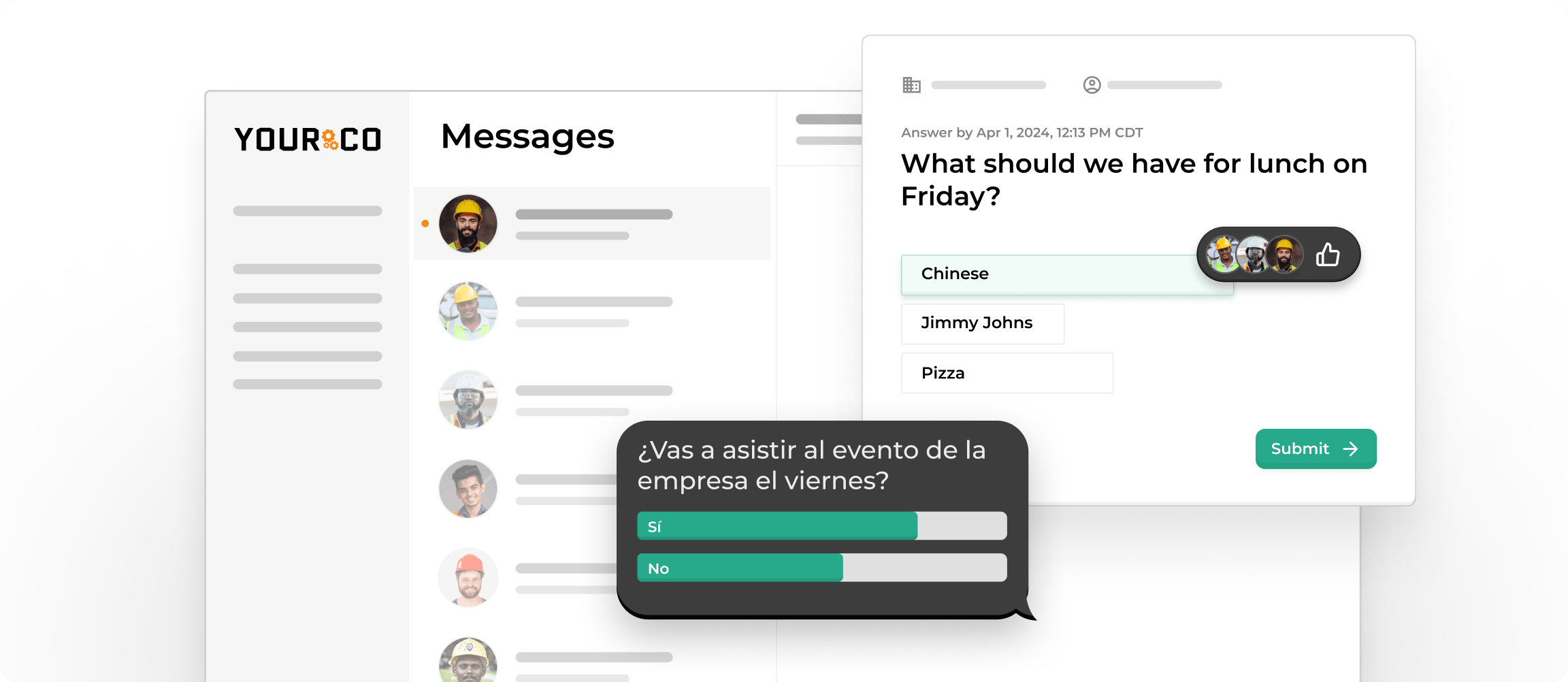
SMS-based platforms like Yourco make this workflow seamless. Messages arrive as regular texts, no smartphone required. Built-in translation across 135+ languages and dialects keeps diverse workforces included. HBR identifies the most common failure mode in employee listening programs as accumulating feedback without acting on it. When someone reports a specific issue, following up quickly builds credibility for the entire system.
Combining sentiment scores with performance data helps catch problems early. Dropping morale typically precedes productivity declines by weeks, giving managers time to address root causes before they show up in output numbers.
Takeaway: The goal of frontline intelligence is to find patterns that indicate where coaching or process changes are needed before a disengaged employee becomes a departed one.
Step 4: Build a Composite Performance Scorecard
A composite scorecard balances traditional productivity measures with the people-centric indicators that predict long-term success. The table below shows a universal weighting framework validated across frontline industries.
Building the scorecard involves four practical decisions.
- Weighting by role: weight based on what actually drives success in each position. A warehouse supervisor might prioritize safety at 35% and collaboration at 25%. A product designer would flip toward innovation and collaboration. Equal weighting across all indicators flattens important role differences. Review weights quarterly.
- Industry emphasis: manufacturing leads with quality metrics such as first-pass yield and OEE; logistics prioritizes picks per hour and OTIF; hospitality centers on guest satisfaction scores; construction prioritizes safety, with TRIR as the headline indicator.
- Data sourcing: pull traditional metrics automatically from HRIS or payroll systems. Supplement with monthly sentiment scores from SMS surveys and quarterly peer feedback. This minimizes manual entry while maximizing what the scorecard actually captures.
- Transparency: employees need to understand what is being measured, how it is weighted, and where the data comes from. Hidden measurement systems breed gaming. Workers who understand the system tend to improve behavior rather than the signal.
Takeaway: A scorecard with three to five weighted indicators from multiple sources is significantly harder to game than any single metric, and more useful for actual coaching conversations.
Step 5: Operationalize and Iterate
Experienced frontline teams have seen measurement initiatives come and go. They need proof that this approach improves their work experience before they engage with it.
Create a Pilot Group
Start with the strongest department or site, somewhere with solid manager-employee relationships and openness to new approaches. Keep the group small enough for hands-on support (20-30 employees) but large enough to test different scenarios. Plan for 8-12 weeks with weekly check-ins to address issues immediately.
Train supervisors to read composite scores and turn insights into coaching conversations. The UBC HR Underperformance Framework offers a useful distinction: separate employees struggling because of capability ("I want to, but I can't") from those with a conduct issue ("I can, but I won't"). The response to each is fundamentally different, and mixing them is one of the most common mistakes in frontline performance management.
Design a Feedback Loop
Counter initial resistance by sharing early wins from the pilot. Peer advocacy from respected team leaders carries more weight than top-down mandates. SMS-based communication reaches every employee within minutes, regardless of device type, and anonymous pulse surveys surface concerns that rarely come up in direct conversations. Act on feedback quickly. Teams that see visible responses provide better data over time.
Scale the Program
Once the pilot proves successful, roll out to one additional location or department per month. That pace lets the team maintain quality support and address unexpected issues without overwhelming operations. Plan quarterly reviews of the entire system to assess whether indicators still predict success, whether weights reflect current priorities, and whether data sources remain reliable.
Takeaway: Initial trends appear within 8-12 weeks, but meaningful patterns take 6-9 months. The pilot period is really about training managers to have better conversations with what they are seeing.
Measure What Matters Across Every Location With Yourco
Better performance indicators only create value when the communication infrastructure exists to collect feedback, share results, and act on signals before they become problems. Yourco gives HR and operations teams an SMS-based channel that reaches every frontline worker, regardless of device type, location, or language.
Yourco's core capabilities include:
- SMS to any phone: no app download, no Wi-Fi, no data plan required, including basic phones and flip phones
- Two-way messaging: frontline workers can respond to pulse surveys, report issues, and ask questions in real time
- AI-powered translation: 135+ languages and dialects, delivered automatically in each worker's preferred language
Yourco integrates with 240+ HRIS and payroll systems, syncing employee data automatically so communication rosters stay current across shifts, locations, and role changes without manual maintenance.
Enterprise Bridge enables corporate leadership to broadcast performance policy updates, recognition announcements, and scorecard rollout communications across all locations simultaneously, while local managers maintain direct two-way communication with their teams.
Frontline Intelligence provides HR and operations teams with centralized visibility into engagement trends, sentiment patterns, and performance signals across all locations. It tracks whether coaching conversations are driving measurable improvements in frontline workers' ratings of their own clarity and contribution. Leaders can identify which sites show the strongest engagement with performance feedback and where early disengagement signals indicate issues that need attention before they affect output numbers.
"We have tried 3 text communication tools, and this is the best experience we've had by far. A consistent line of communication to our employees is one of the most important things, and Yourco is the most reliable system around."
— Terri Kasper, HR Manager, Calumet Carton Company
After 90 days on Yourco, companies see two-way employee engagement reach 86%.
Try Yourco for free today, or schedule a demo to see the difference the right workplace communication solution can make for your company.
Frequently Asked Questions About Measuring Job Performance
How do I prevent employees from gaming new performance metrics?
Use multiple data sources for each indicator and rotate measurement periods quarterly. When collaboration scores are drawn from peer feedback, project outcomes, and cross-team participation, manipulation becomes much harder. Transparency about calculation methods also reduces gaming, and workers who understand what is being measured tend to focus on the behavior rather than the signal.
What is the best way to get honest feedback from employees who distrust performance systems?
Start with anonymous SMS surveys focused on specific work challenges rather than personal evaluation. When people see their input leading to actual improvements: better equipment, clearer procedures, more training, they become more willing to provide detailed feedback. HBR's research confirms that visible action is the single most important factor in maintaining participation over time.
How do I handle managers who resist moving beyond traditional productivity measures?
Show them how composite indicators surface coaching opportunities they are currently missing. A manager who sees that low collaboration scores predict turnover, or that high learning velocity signals promotion readiness, often becomes the strongest advocate for the new approach. Peer success stories from other departments carry more weight than executive mandates.
How long does it take to see meaningful results from new performance indicators?
Initial trends appear within 8-12 weeks, but meaningful patterns require 6-9 months of consistent data collection. Start with indicators that provide immediate coaching value rather than waiting for perfect long-term predictive models. Early wins in manager-employee conversations justify the investment while longer-term patterns develop.
What should be done when sentiment scores consistently lag performance metrics?
A persistent lag between sentiment and performance often indicates process problems, resource constraints, or management issues that affect morale despite strong individual performance. Use the disconnect as a diagnostic. High performers with low sentiment scores are retention risks worth a direct conversation. Most frontline attrition traces back to relational factors: how workers interact with their manager, whether they feel their contribution is seen, and whether there is a visible path forward.
Can these indicators work for remote and hybrid teams?
Yes, especially emotional intelligence and learning-velocity measures that translate well across work arrangements. Adjust collaboration indicators to focus on project outcomes and team effectiveness rather than physical presence. SMS-based platforms like Yourco provide feedback tools regardless of location, shift, or device type, giving workers without regular email or device access the same opportunity to participate as desk-based employees.